
The Bloody Truth: An Interview with Ruby's Red Wash founder Carolyn
Tell us a little about yourself! What do you want customers to know about you?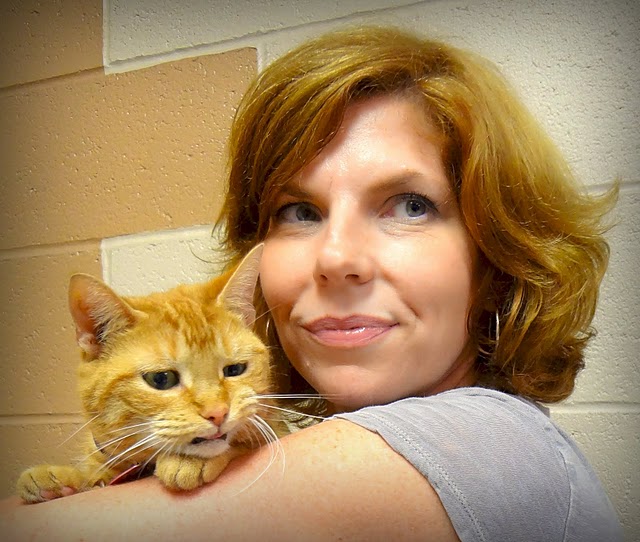
First, I have to say, thank you for asking! I would like customers to know that my product and the passion I have for it is thoroughly genuine and reflective of who I am. The message of self-acceptance and the joy of finding a product that actually works on blood stains and makes life easier is what I truly hope for women. I want women and girls to find Ruby's Red Wash a practical, happy and encouraging part of their world, even though it may merely be a product they use once or twice a month. To me, Ruby's Red Wash is a movement: an appreciation of female being and some liberation in a bottle. Anything I say and do regarding Ruby's Red Wash is very personal to me and, frankly, just like something you'd find in my diary.
What inspired you to create Ruby's Red Wash? What was the process like?
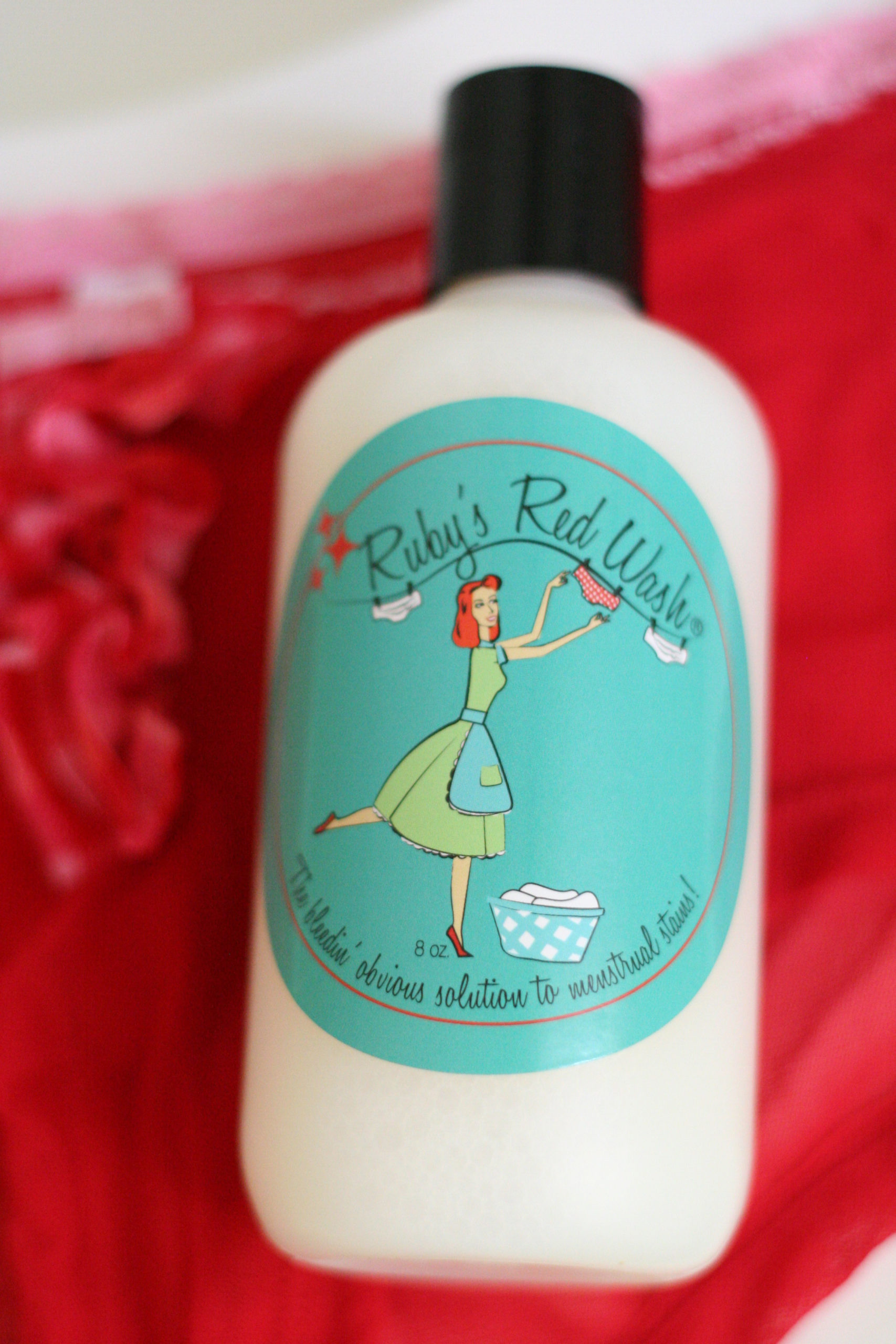
I was conducting research for my Ph.D. dissertation and it was on the phenomenology of Menstruation. I compared women's concrete experiences of menstruation to an extensive analysis of the meanings of menstruation found in and produced by the culture. The title turned out to be 'The Bloody Truth: A Psychological and Cultural Study of Menstruation as Lived and Experienced by Women.' It took about six years to conduct and in the end it was long and really two dissertations.
The review of the cultural meanings of menstruation became very depressing to analyze and write about. It was essentially a review of the history of oppression of women-- and, the most deflating part was that these oppressive, damning messages to women are still present in the culture, only they are still invisible to women.
Women have taken on or internalized the notions that they have a 'dirty secret' because of menstruation and this dirty secret makes them irrational compared to men and also inferior. Even women who grew up in a fairly progressive and accepting household demonstrated that they were not immune to the (patriarchal) messages about menstruation delivered by the culture. That was and still is depressing to me.
I started thinking about how to help the greatest number of women to address this basic misunderstanding about their being. It was my contention all along that the fact that menstruation is still a secret in the culture demonstrates that women are still second class citizens. As long as the topic remains taboo and 'inappropriate,' then women and girls still do not share the same status as men and boys, and female being remains not fully embraced by the culture.
 What do you find most exciting about your career?
Every now and then I realize that this is thoroughly mine and I am, for once, fully in charge. I can say anything I want on my blog, I can run a special if I want, and I can work with the people with whom I want to collaborate. It's also very scary for those same reasons. Sometimes it is terrifying because mistakes are completely my own, too.
But, the best part is imagining all those women and girls out there who already have their own bottle of Ruby's. Every time they use it, and even when it is just sitting on their shelves, all of these people are holding my message of self-acceptance. Every one of them has accepted that it is possible to be honored with a product which respects the unique qualities and functions of their body.
On my website, I call Ruby's Red Wash my 'gift' to women and girls, and I honestly feel that joy of gift-giving through the creation of this product. I am still hand-bottling and with every bottle I fill and label and ship, I actively imagine and hope for a certain kind of relief and peace for the recipient. Although I don't want to curse myself, I have said that if the business crashes tomorrow, I will still consider it a success, given that I have already reached so many women and girls.
Your blog frequently discusses the messages women receive about menstruation and their bodies. What is your goal regarding the conversations we have with each other and in the media about women's bodies?
My goal is to have women at least stop and question what is being fed to them by the media (and their friends, family and co-workers). One of my girlfriends recently told me about an exchange she witnessed between some of her friends, two of whom happened to be lesbian. There was some discussion going on about reproductive rights and one woman made a joke, 'What do you care? It doesn't apply to you.' My friend made the point that just because you don't plan on having children and that your sexual preference doesn't create the circumstances for pregnancy and childbirth doesn't mean that reproductive rights doesn't apply to you. It is a human issue. The argument that lesbians "don't use" their reproductive organs parallels the old, sexist idea that women are only as valuable as long as they can produce children. Countless hysterectomies have been performed over the years because women "aren't using" their uteruses for childbearing anymore. Until my friend spoke up, her friend didn't understand the invalidating idea which she was perpetuating. Those are the kinds of dialogs I hope to create.
Do you use reusable menstrual products? If so, what do you use and what prompted you to make the switch?
For the last 10 years, since my research and discovering dioxins, I have been using organic tampons and some pads. I order a year's supply and stash them in every bathroom in the house and in my purses. That has been a luxury for me- to have an ample supply, something I didn't know about or give myself as a teenager or when I was in my twenties. However, I have been planning on trying a menstrual cup, because I think that would be perfect alternative to tampons for me.
What do you wish you had known as a young woman experiencing menarche? How has your perspective on menstruation changed since then?
I had a mother who did her best but who was terrified about all kinds of things in life including sexuality and a father who was downright disgusted about all things related to menstruation and wasn't afraid to show it. When I started my period, I called my mother to the bathroom. She came in and then went back out. When she came back in, she handed me a box of tampons with a smile, albeit a very forced smile, and said 'good luck.' Even though her smile was forced,she was trying to tell me that what was happening to me was okay and that life would be okay.
My mother died the next year and I was pretty much left to my own devices regarding everything. I had to deal with periods in total secrecy and thought that's just what being a woman means. I could have used all kinds of help then, but I would have given anything if someone had given me a period starter kit or a lovely period pack of sorts. The message that those send would have really helped me to counter all the crap I heard about female being. Something like that would have helped me feel better about being, in general.
Do you think it's possible for women to celebrate their cycle rather than viewing it as a "curse"? How could this be accomplished?
I think it's possible to view your menstrual cycle as any other part of yourself. Do I always love the way I react in the world? Do I always love the way I write? Do I always love my hair? The answer is 'no' to all of those questions. But I do, however, always try to be appreciative of my attempt to handle things, my attempt at writing, the mere presence of my hair. By the same token, I do not always love my period. I think the message that women need to always love and celebrate their menstruation is a terrible burden to place on women. Sometimes it's just damn annoying to have cramps or to have flooded your pants or to have buy menstrual gear. I do not 'celebrate' my menstrual cycle by pretending that cramps are glorious and that the expense for menstrual supplies is a great and wonderful thing. I am, however, respectful of my body that it needs to cramp to menstruate. And I make sure I honor myself and my cycle by having enough supplies on hand or resting when I need to and recognizing that some of my emotionality during my period may be extreme but that it also provides me insight into aspects of my life that I might otherwise ignore. Like the women in my study, even the ones who declared that they hated their menstrual cycle, I have a relationship to my period, it is a part of me, and I will miss its presence when it is gone.