
My Postpartum Recovery Kit

Whether you've eagerly planned every detail of your dream labor, or (like me) you've avoided thinking about it as much as possible, it's easy to put together a postpartum recovery kit that will make your life after labor as simple and comfortable as possible. Here are some of the things you should consider for your kit:
--Cloth pads. You'll bleed. You'll bleed a lot. You'll need a good supply of overnight pads for a couple of weeks, and after that the flow will gradually lessen. After about 5 or 6 weeks, it'll stop entirely. (Note: you can occasionally get a humongous gush of blood that will soak everything in its path and leave the room you're in looking like someone's been murdered there. Don't worry about cloth pads not containing a gush like this. Nothing could contain it. Just accept that you may have to mop...or better yet, ask your significant other to do it!)
Another great thing about cloth pads for postpartum is that you can soak them in water or witch hazel and freeze them. This can be very helpful during the first week or so when you are very, very sore.
--Really loose, really high-rise underwear. The only reason underwear this ugly can be suffered to exist is that it is so comfy for the postpartum period. My hospital gave me a couple pairs, actually, but you might want to actually buy some. Looseness is key--you don't want anything pressing on sore, swollen areas. Also, although I have no personal experience with C-sections, I've been told that high-rise undies are useful because they won't press on your incision.
--Squirt (peri) bottle. This, my friends, is something you cannot do without. Don't even try to use toilet paper for the first week or two. Even the thought will give you the cold shudders. A peri bottle is for gently squirting water after you use the loo. When you are nice and clean you can gently--oh so gently--dab yourself dry with the toilet paper. If you neglect everything else on this list, do not neglect the peri bottle. (A hospital will provide one for you, but if you are homebirthing, please please please find yourself one in advance.)
--Other remedies for soreness that sound good to you. I took the "do not look below, do not touch, and everything will be fine" approach, but if your damage during birth was more extensive, you may need additional care. Witch hazel to soak your cloth pads in, or postpartum bath herbs, can be helpful.
That's all you really need for postpartum care, but since life postpartum is All About Baby, and baby in the first couple weeks is All About Breastfeeding, your postpartum kit should really include some stuff to make learning to breastfeed easier on you:
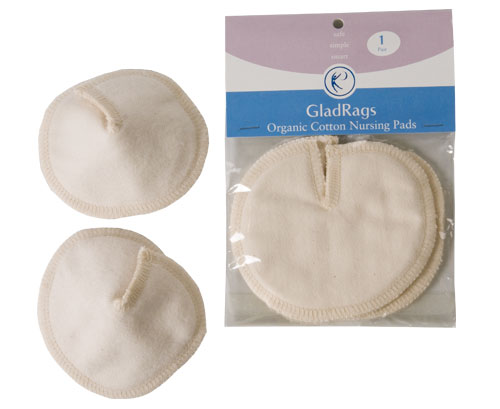 --Nursing pads. When your milk comes in, you will soak them every time you let down, at least for the first few months. You will want them to prevent your clothes from dripping with milk, your bed from being wet, etc. etc. In fact, you want as many as you can get, because you'll soak through them quickly and it's nice to change them out. GladRags nursing pads are nice and thick and absorbent.
--Nursing bras. At first, when you're lounging around in jammies trying to figure out the breastfeeding business, these are basically to hold the nursing pads in place, but they are important for when you actually reemerge into the world too! There are a couple of types, and you want some of both: sleep bras, which are less supportive but comfier and offering easier access, and the snap-down real bra type, which are more supportive (and cover the milk leaks) better, and look better under clothes, but can be kind of fiddly till you get the trick of snapping the flaps up and down while juggling a baby. Keep in mind that whatever you wear will be stiff with dried milk after a day of use, so you want at least one spare so that you have something to wear while the first one is washing. Two spares would be better.
--Nipple cream or butter. I made the mistake of taking the "wait and see if I need it" approach with this. Don't wait and see. You need it. For a day or two you'll think you're fine, but after a couple of days your nipples will crack and blister and you will swear like a shark-bitten sailor every time baby latches on. Olive oil does not work. Trust me. My husband had never heard me use those words before. I cried (and swore) every time I fed my daughter from day two till day five, even after I started putting on the butter...and she wanted to eat every two hours. You only need it for the first couple weeks, but it's worth its weight in gold.
--Nursing pillow. These can be really helpful when you're trying to position a squirmy hungry newborn, especially if you're tall and your baby is small, but are not strictly necessary. I had a My Brest Friend pillow and used it till my daughter was a month old or so.
--Little syringes (no needles) for feeding colostrum. This was a trick taught to me by a wonderful maternity ward nurse when my daughter had trouble latching on one side. Newborns wake up ravenous, and being ravenous, they are not forgiving when they can't immediately eat. They don't want you patiently guiding them to latch. They want food and they want food NOW. If your baby starts getting frustrated, you can hand-express some colostrum drop by drop, sucking it up into the syringe. Then you can let the baby suck on your pinky finger, nail side down, while you slowly dribble the colostrum down your finger into baby's mouth. They get practice sucking just like they would on the nipple, and they get food. After they calm down a little, you can try again, and they'll be much more likely to take the breast. (My hospital provided the syringes when asked.)
--Hand breast pump. If you need to pump for some reason, you can rent a hospital-grade pump (and in fact might have to, depending on why you need the pump). But newborn babies are kind of weird about breastfeeding, and they sometimes have problems that don't require a fancy pump, just a little pumping help till they get themselves figured out. For instance, my daughter refused to eat on the right-hand side till she was two weeks old. She got plenty of milk on the other side, but to keep from being super lopsided, I pumped on the right till she suddenly decided to start nursing there. My little $20 Medela Harmony did a great job, and was good later for the occasional bottle. A cheap little hand pump can be a good thing to get "just in case," if you don't have a fancier one around.
--Copy of The Nursing Mother's Companion and phone numbers of La Leche League, lactation consultant and/or really experienced friend. Yes, we're all amazing goddesses of motherhood, but sometimes even goddesses have issues, and it's good to be prepared. This book is the best one I found with a realistic, useful discussion of problems and what to do about them. Phone numbers...well, if you need them, it's good to have them to hand. (Your hospital may provide free breastfeeding classes led by a lactation consultant -- mine did. Go, as often as you're allowed. They are the most useful help you will find, short of a one-on-one lesson.)
That's it! With a little luck, a little knowledge of what's to come and the items on this list, you should be well on your way to a happy and relatively stress-free postpartum experience. And if you find anything essential that's not on the list, come back and let me know so we'll all be better prepared for next time!
Visit GladRags' Mothering.com Community page to connect with Shauna and join the best natural parenting community on the web!